
Students nationwide will gain hands-on access to AI computing, application hosting, DevOps, server administration and cybersecurity environments
OGBOMOSO, NIGERIA
SQI College of ICT has completed the deployment of new high-performance, private AI and server infrastructure, giving the institution greater control over the computing environment used for teaching, research, software deployment and institutional operations.
Hosted and managed in Nigeria, the infrastructure gives authorised students and staff across all SQI campuses access to a private cloud environment for artificial intelligence development, application deployment, research collaboration, server administration and cybersecurity practice.
The College has already put the infrastructure into operation. Its most recent nationwide scholarship exercise ran fully on the new system, making it the first SQI scholarship application platform to be built, hosted and maintained entirely by Nigerians on infrastructure located in Nigeria.
SQI has conducted its annual scholarship programme since 2011. Moving the platform in-house gives the College direct control over its computing capacity, applicant data, system administration, security policies and recovery planning, while reducing its dependence on third-party hosting platforms.
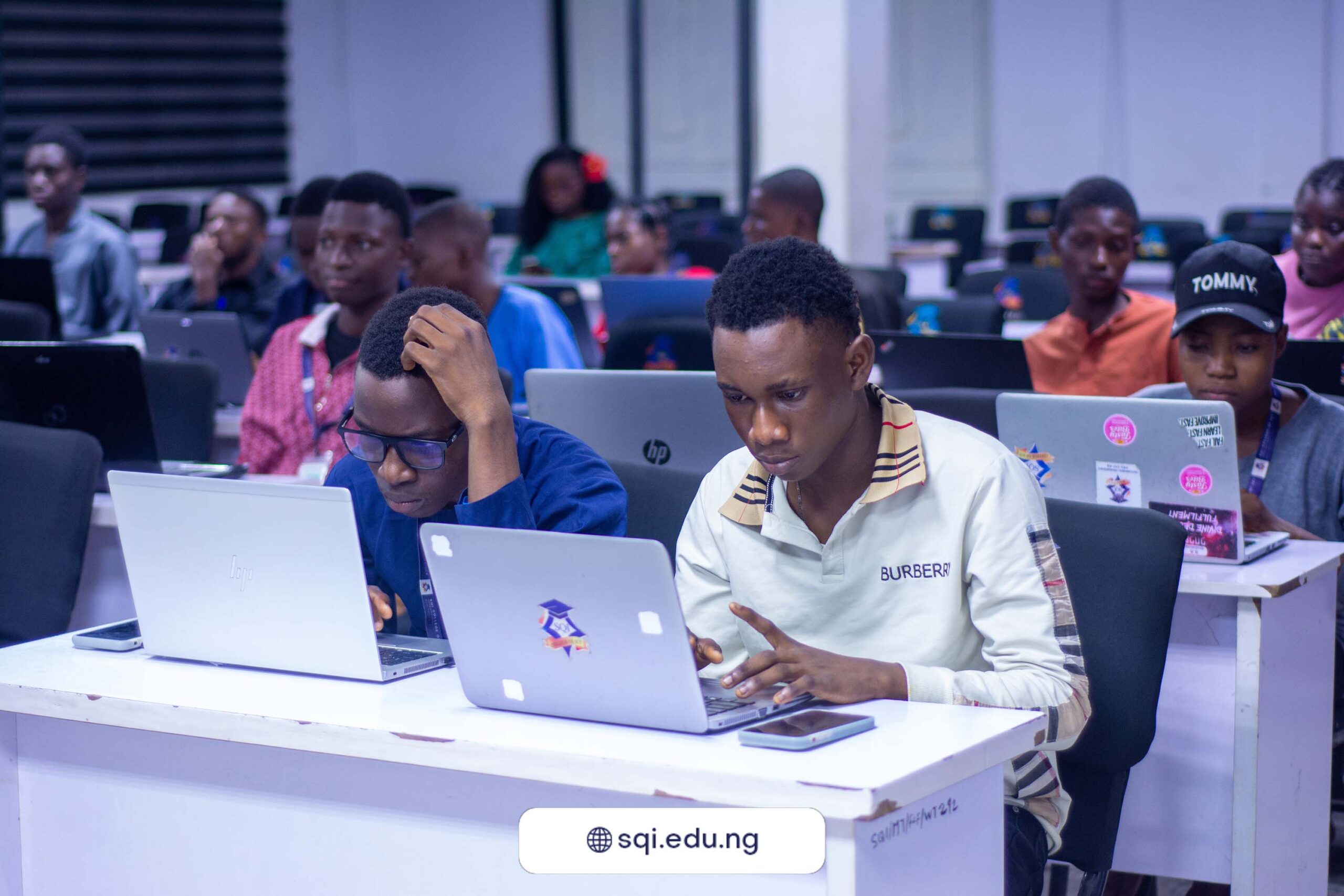
The investment also changes what students can experience while learning. Students across SQI campuses now have unthrottled academic access to the infrastructure for approved exploration, research and innovation. From January 2027, they will be able to host and test their web applications on the platform at no additional hosting cost while they are still studying.
A student will therefore be able to develop an application, deploy it to a live server, configure its environment, connect a database, monitor its performance, study system logs, manage access, investigate vulnerabilities and troubleshoot failures within a real computing environment.
For students studying DevOps, server administration and cybersecurity, the infrastructure provides something that classroom explanations and simulations cannot fully reproduce: responsibility for systems that must actually run.
“A student should not complete a programme in DevOps, cybersecurity or server administration having only read about servers or watched someone else manage one,” said Adeyemi C. Aderinto, Founder and President of SQI College of ICT. “The student must enter the environment, deploy something, configure it, encounter real problems, investigate what happened and restore the system. That is how technical confidence and competence are built.”
The infrastructure also gives SQI the capacity to fine-tune, test and deploy local artificial intelligence models while keeping sensitive training data and workloads within an environment controlled by the institution. It will support applied AI research and experimentation across academic departments, while helping the College prepare for the accreditation of Artificial Intelligence as part of its planned Higher National Diploma programmes in 2027.
The deployment comes as Nigeria places greater emphasis on local digital infrastructure and data sovereignty.
In June 2026, the Central Bank of Nigeria directed banks, fintech companies and other licensed payment operators to ensure that payment transaction data generated within Nigeria is stored and managed in Nigeria by 1 January 2027. Although the directive applies specifically to the payments industry, it points to a wider national need for local infrastructure and professionals capable of building, securing and managing it.
The major Namecheap service outage of 13 August 2026 provided another reminder that digital services ultimately depend on physical infrastructure, reliable power and cooling, effective monitoring, competent personnel and tested recovery systems. The incident followed a cooling-system failure at a Phoenix data centre and affected hosting, email, DNS and other services used by customers in different parts of the world.
“The recent Namecheap incident reminds us that every digital service depends on physical infrastructure, skilled people and effective recovery systems,” Aderinto said. “When critical infrastructure is outside your control, decisions and failures elsewhere can immediately affect your operations.
“Nigeria cannot build a strong digital economy by remaining only a consumer of infrastructure developed and controlled elsewhere. We must train people who can build, secure, manage and improve the infrastructure that will power our own digital future.”
The new SQI infrastructure will provide practical experience in areas including:
- artificial intelligence model development, fine-tuning and deployment;
- web application hosting and testing;
- Linux and server administration;
- DevOps workflows and deployment automation;
- containerisation and application environment management;
- database deployment and administration;
- infrastructure and network monitoring;
- authorised cybersecurity testing;
- identity and access management;
- system logging and incident investigation;
- backup, recovery and service continuity; and
- remote research and technical collaboration.
Authorised users will be able to connect securely from SQI campuses and other approved locations, allowing students and staff to collaborate across Ogbomoso, Ibadan, Lagos, Abuja, Abeokuta, Osogbo and the College’s virtual learning community.
The infrastructure is primarily an educational, research and institutional environment. It is not being presented as a commercial hosting service or as a substitute for the regulated production infrastructure required by banks, fintech companies and payment service providers.
According to SQI, its purpose is to close the distance between learning how digital systems work and accepting responsibility for building and managing them.
“We established SQI because Africa must move from merely using technology to creating it,” Aderinto added. “This infrastructure gives our students another level of access to what is possible. They will not simply write applications. They will learn what it takes to deploy, protect, maintain and keep those applications running.”
The project reflects the relationship between SQI’s training and technology-development work. The institution uses functioning systems to demonstrate what can be built, then gives students the knowledge, tools and practical environment required to build systems of their own.
The deployment follows SQI’s 2026 Annual Scholarship Programme, themed “AI vs AI,” and forms part of the College’s continuing investment in artificial intelligence, software engineering, cybersecurity and locally developed digital capacity.
About SQI College of ICT
Founded in 2008 as Soft Quest Incorporated, SQI College of ICT is an NBTE-accredited monotechnic headquartered in Ogbomoso, Nigeria, with permanent campuses in Ogbomoso, Ibadan, Lagos, Abuja, Abeokuta and Osogbo, as well as virtual study options.
The College currently awards National Diplomas and Professional Certificates in technology and related disciplines. It is preparing to introduce Higher National Diploma programmes in 2027, subject to the applicable approval and accreditation processes.
Since 2011, SQI has operated an annual scholarship programme designed to expand access to technology education for Nigerian and African students.
Its mission is to make Africa a tech continent, one mind at a time.
Media contact:
Seyi Odekomaya
07074889431
Director of Academics and Partnerships
SQI College of ICT
seyi.odekomaya@sqi.edu.ng
https://sqi.edu.ng